The conference is jointly organised by Maynooth University Chinese Studies, the Asia-Pacific Association of Sport Studies (APASS), the Association of China-Ireland Academics (ACIA), Asian Journal of Sport History & Culture (AJSH&C), witht the suppot of Europan Academy of Sciences and Arts (EASA) and UCC Confucius INstitute. The theme of the conference is: “Building Bridges Across Boundaries – The Role of Athletic and Cultural Activities in Diplomacy and Global Engagement.” Scholars and practitioners from multidisciplinary backgrounds will gather in Ireland to explore key issues and highlight the latest developments in their respective fields.
Key Themes
- Cross-cultural communication and understanding
- Cultural heritage and identity
- Tourism and cultural exchange
- Diplomacy through cultural activities
- Sports diplomacy and soft power
- Educational and cultural exchange programmes, and people-to-people connections
- Legal and ethical aspect of cultural exchange activities
International Conference
Building Bridges Across Boundaries – The Role of Cultural and Athletic Activities
30 October – 1 November 2026
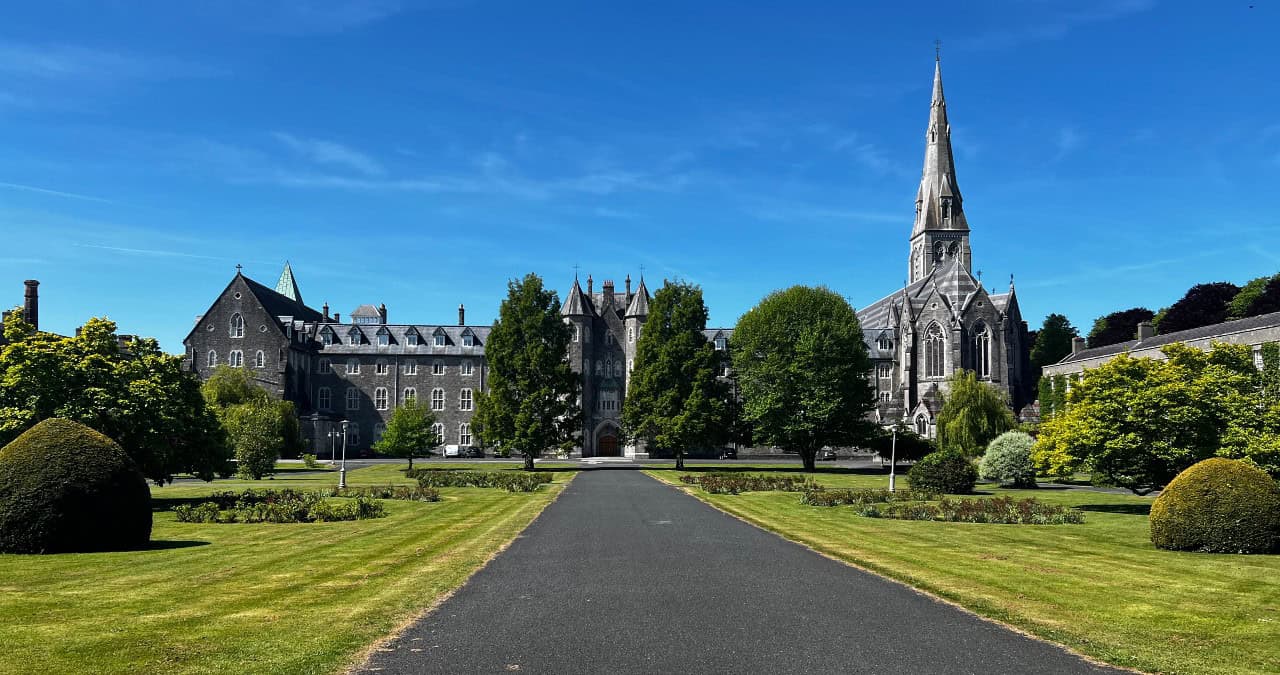
National University of Ireland Maynooth
Schedule
30 October
14:00-17:00 Registration
31 October (Day One)
Venue: Iontas Building, Room 1.24
09:00-09:10 Conference Opening
Prof. Alison Hood, Dean of Arts and Humanities, Maynooth University
Prof. Peter Herrmann, European Academy of Sciences and Arts
Alejandra Black, Taylor & Francis Group
09:10-11:05 Session One (Chair: Dr. Ciaran Reilly)
09:10-09:40 Keynote Presentation: A Neglected Bridge: The Time Dimension
Prof. Wray Vamplew, University of Stirling
09:40-09:50 Q&A
09:50-10:10 Geophysical Culture? Strength, Heritage and the Movement of Physical Traditions Across Borders
Dr. Conor Heffernan, Ulster University
10:10-10:30 Peace as a Floating Signifier in the Context of International Sport
Dr. Jung Woo Lee, University of Edinburgh
10:30-10:50 The Rise of Asian Consciousness and the Development of the Asian Games (1913-2026)
Prof. Fan Hong, Bangor University
10:50-11:05 Q&A
11:05-11:20 Tea Break
11:20-12:20 Session Two (Chair: Dr. Liu Weiming)
11:20-11:40 Years of Sino-American Table Tennis Diplomacy: Concepts and Insights into People-to-People Diplomacy
Prof. Deng Zhonghao, Sichuan University
11:40-12:00 Sports Diplomacy and the Building of a Community with a Shared Future for Mankind: A Contemporary Interpretation of Marx’s Theory of World History
Dr. Liu Zhengfang, Sichuan University
12:00-12:20 Q&A
12:30-13:30 Lunch Break (Phoenix Restaurant)
13:30-15:10 Session Three (Chair: Prof. Wray Vamplew)
13:30-14:00 Keynote Presentation: The Practice and Experience of Chinese Modernization
Prof. Jiang Yongmu, Sichuan University
14:00-14:10 Q&A
14:10-14:30 The Interactive Co-Progression of the Sinicization of Marxism and the Modernization of Confucianism
Dr. Liu Lisha, Sichuan University
14:30-14:50 Historical Forms of Socialist Spatial Production: The Third Front Construction and the Origins of Inland Industrial Urban Space in Sichuan (1964–1980)
Prof. Liao Yuhan, Sichuan University
14:50-15:10 Q&A
15:10-15:30 Tea Break
15:30-16:50 Session Four (Chair: Dr. Jung Woo Lee)
15:30-15:50 AI Technology Made Open Source to Empower Intelligent Civilization
Prof. Hu Fang, Sichuan University
15:50-16:10 Culture through GenAI: Rethinking cultural encounters in language education
Dr. Liu Weiming, Dublin City University
16:10-16:30 Mediating Intercultural Understanding and Career Preparations Though Educational Exchange in the Computing Sciences
Dr. Joseph Timoney, Maynooth University
16:30-16:50 Q&A
17:30-19:30 Dinner (Orient, Maynooth Main Street)
1 November (Day Two)
Venue: Iontas Building, Room 1.24
09:00-10:45 Session One (Chair: Dr. Conor Heffernan)
09:00-09:30 Keynote Presentation: Paradox of Our Time: Soft Policies as Warrant against Hard Political Confrontation (Online)
Prof. Peter Herrmann, Central South University
09:30-09:40 Q&A
09:40-10:10 The Geopolitical Logic and Strategic Evolution of China’s Road Assistance to Laos, 1961 to the Present (Online)
Prof. Qin Bo, University of Electronic Science and Technology of China
10:10-10:30 Golf and the Power Elite: The History of Golf Diplomacy and Politics in Thailand and Southeast Asia (Online)
Dr. Brett M Bennett, Western Sydney University
10:30-10:45 Q&A
10:45-11:00 Tea Break
11:00-12:20 Session Two (Chair: Dr. Lu Zhouxiang)
11:00-11:20 Common Rules, Different Understandings of Justice: Sports Arbitration Across Cultures
Jiangyuan Fu, Maynooth University
11:20-11:40 From ‘Going Abroad’ to ‘Competing on Home Turf’: the Huanji IFBB Competition System and Pro Bodybuilding in China
Mr. Xiao Luo, Huanji/Beijing Sport University & Prof. Xuemei Cui, Langfang Normal University
11:40-12:00 Digital Inheritance Paths of Sports Intangible Cultural Heritage
Dr. Zhang Jie, Shenzhen University
12:00-12:20 Q&A
12:30-13:30 Lunch Break (Phoenix Restaurant)
13:30-16:30 Session Three (Chair: Dr. Mengdi Wang)
13:30-14:00 Keynote Presentation: Reasons for Su Chao Success (Online)
Prof. Jean-Loup Chappelet, University of Lausanne
14:00-14:10 Q&A
14:10-14:30 Sport and Development in Indonesia
Prof. Amung Ma’mun and Dr. Syarifatunnisa, Indonesia University of Education
14:30-14:50 Governmental Conceptions of Sport in Indonesia: The Historical Evolution from Diplomatic Capital to Developmental and Competitive Capital
Dr. Anira, Indonesia University of Education
14:50-15:00 Q&A
15:00-15:15 Tea Break
15:15-15:35 The Gaelic Athletic Association and Cultural Identity
Dr. Ciaran Reilly, Maynooth University
15:35-15:55 Language, Embodied Practice and People-to-People Connections in China-Ireland Cultural Exchange: From Chinese Language Education and WeChat Communication to Yoga
Dr. Ni Jun, Technological University Dublin
15:55-16:15 Martial Arts and the Construction of Chineseness in the Southeast Asian Diaspora, 1800s-1930s
Dr. Lu Zhouxiang, Maynooth University
16:15-16:30 Q&A
16:30-16:35 Conference Closing: Remarks by Prof. Fan Hong
Keynote Speakers:
Wray Vamplew is Emeritus Professor of Sports Studies at the University of Stirling. He worked in Australia for eighteen years, latterly serving as Pro-Vice-Chancellor at Flinders University of South Australia, before joining De Montfort University, where he established a centre of excellence in sports history. In 2001, he joined the University of Stirling and was appointed Scotland’s first Chair in Sports History. He has authored and edited more than twenty books and published over a hundred academic papers and reports. He also has extensive experience as a consultant for sports, education, government and media organisations in Australia and Britain. His book Pay Up and Play the Game (Cambridge University Press, 1988), a study of professional sport in Britain, won the inaugural North American Society for Sport History International Book Award. He also received the Australian Sports Commission’s National Sport Science Education Award for his work on sports violence. His expertise lies in sports social science, particularly sports history, economics and quantitative analysis. In teaching, he coordinates the MSc module Ethics in Sport and leads an undergraduate reading unit on the ethics of sport.
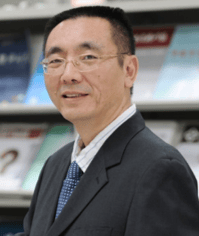
Jiang Yongmu is a Professor at the School of Marxism, Sichuan University. He is a Chief Expert of the Central Marxist Theory Research and Development Project, Chief Scientist of Sichuan University’s Marxism and Contemporary China key disciplinary cluster under the national “Double First-Class” initiative, and a recipient of the State Council Special Government Allowance. His distinctions include the National Baosteel Outstanding Teacher Award, recognition as an Academic and Technical Leader of Sichuan Province, and selection as a Cultural Leading Talent under the Tianfu Talent Programme. He serves as Vice-President of the Chinese Association of Political Economy, the National Society for the History of Marxist-Leninist Economic Thought, and the Chinese Society for the Study of Capital. His research focuses on the adaptation of Marxism to the Chinese context, socialist political economy with Chinese characteristics, and issues concerning agriculture, rural areas and farmers. He has published more than 180 academic papers, and edited or co-authored more than 20 academic books. His achievements have earned numerous research and teaching awards, including three First Prizes in the Sichuan Provincial Outstanding Achievements in Philosophy and Social Sciences Awards.
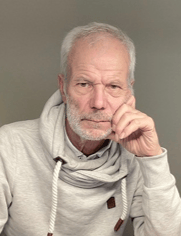
Peter Herrmann is an accomplished social philosopher and academician with a multidisciplinary professional background spanning sociology, political science, philosophy, and law. Throughout his career, he has held numerous third-level teaching and research positions internationally. His academic trajectory initially focused on social policy and European Integration, before orienting increasingly toward political economy, and later evolving to center heavily on law and the philosophy of law. Professor Herrmann currently serves as a full-time research fellow at the Human Rights Centre within the Law School of Central South University in Changsha, China. Alongside his work in China – which earned him the prestigious Chinese Government Friendship Award – he continues to operate globally as a social philosopher, maintaining positions as an adjunct professor at the University of Eastern Finland (UEF) within the Department of Social Sciences in Kuopio, and as an Honorary Associate Professor at Corvinus University of Budapest in Hungary.
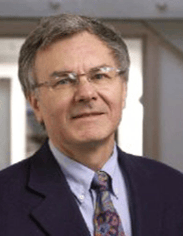
Jean-Loup Chappelet is an emeritus professor of public management at the Swiss Graduate School of Public Administration (IDHEAP) of the Faculty of law, criminal sciences and public administration of the University of Lausanne. He was the IDHEAP Dean from 2003 to 2011 and has benn a guest professor at the University of Lyon (France), the University of Louvain-la-Neuve (Belgium), Seoul National University (Korea) and Tsukuba University (Japan). He previously held management positions at the International Olympic Committee (1982-1987) and in one of the “big-four” international consulting and accounting-firms (1988-1992). For 12 years (1999-2011), he was the director of the MEMOS programme, a master programme run by 11 universities for Olympic Solidarity. He was the General Secretary of the International Coubertin Committee (2003-2017) and a member of the World Anti-Doping Agency (WADA)’s Education Committee (2013-2016) and social science research group. He is a member of the ASOIF (Association of Summer Olympic International Federations)’ Governance Taskforce. He has authored several books and many scientific articles. His research is now focused on the governance of international sport organizations and events.


Leave a Reply