
Martial Arts in Asia: History, Culture and Politics (Routledge, 2018)
Edited by Fan Hong and Gwang Ok
The reawakening of Asian martial arts is a distinct example of cultural hybridity in a global setting. This book deals with history of Asian martial arts in the contexts of tradition, religion, philosophy, politics and culture. It attempts to deepen the study of martial arts studies in their transformation from traditional to modern sports. It is also important that this book explores how Asian martial arts, including Shaolin martial arts and Taekwondo, have worked as tools for national advocate of identities among Asians in order to overcome various national hardships and to promote nationalism in the modern eras. The Asian martial arts certainly have been transformed in both nature and content into unique modern sports and they have contributed to establishing cultural homogeneity in Asia. This phenomenon can be applied to the global community.

Routledge Handbook of Sport Policy (Routledge, 2015)
It is difficult to fully understand the role that sport plays in contemporary global society without understanding how and why governments, NGOs and other organizations formulate and implement policy relating to sport. The Routledge Handbook of Sport Policy is the only book to offer a comprehensive overview of current perspectives, techniques and approaches to the analysis of sport policy around the world. The book introduces a diverse range of approaches to policy analysis across the full range of political and societal contexts, including developed and developing economies; state-centric, mixed economy and market-led systems, and both liberal democracies and political systems characterized by a dominant elite. It is arranged into five sections addressing the key topics and themes in the analysis of contemporary sport policy, including: theory and its implications for methodology; globalization, governance, partnerships and networks; elite sport policy; development, sport and joint policy agendas; sport policy and social theory. With contributions from leading policy analysts around the world, including Europe, North America, the Middle East and Asia, this book is important reading for any student, researcher or professional working in sport management, sport development, sport and society, or mainstream public policy, policy analysis or social policy.

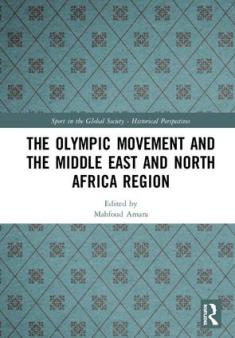
The Olympic Movement and the Middle East and North Africa Region (Routledge, 2019)
Edited by Mahfoud Amara
This book offers different insights into the study of the Olympic movement in the Middle East and North Africa (MENA) region. It seeks to capture how political and cultural nation-state building and economic transformations are impacting the region’s engagement (and disengagement) with the Olympic movement and the Olympic Games, as well as Paralympic sports. This book was originally published as a special issue of The International Journal of the History of Sport.
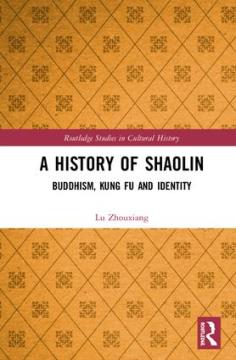
A History of Shaolin Buddhism, Kung Fu and Identity (Routledge, 2019)
By Lu Zhouxiang
Shaolin Monastery at Mount Song is considered the epicentre of the Chan school of Buddhism. It is also well known for its martial arts tradition and has long been regarded as a special cultural heritage site and an important symbol of the Chinese nation. This book is the first scholarly work in English to comprehensively examine the full history of Shaolin Monastery from 496 to 2016. More importantly, it offers a clear grasp of the origins and development of Chan Buddhism through an examination of Shaolin, and highlights the role of Shaolin and Shaolin kung fu in the construction of a national identity among the Chinese people in the past two centuries.
Christianity and the Transformation of Physical Education and Sport in China (Routledge, 2019)
By Huijie Zhang, Fan Hong and Fuhua Huang
Despite the popularity of sport in contemporary China, the practice of physical education is not indigenous to its culture. Strenuous physical activity was traditionally linked to low class and status in the pre-modern Chinese society. The concept of modern PE was introduced to China by Western Christian missionaries and directors of the Young Men’s Christian Association (YMCA). It then grew from a tool for Christian evangelism to a strategic instrument in Chinese nation-building. This book examines the transformation of Chinese attitudes toward PE and sport, drawing on the concepts of cultural imperialism and nationalism to understand how an imported Western activity became a key aspect of modernization for the Chinese state. More specifically, it looks at the relationship between Christianity and the rise of Chinese nationalism between 1840 and 1937. Combining historical insight with original research, this book sheds new light on the evolution of PE and sport in modern China. It is fascinating reading for all those with an interest in sports history, Chinese culture and society, Christianity, physical education or the sociology of sport.

A History of Chinese Martial Arts (Routledge, 2018)
Edited by Fuhua Huang and Fan Hong
Chinese martial arts have a long, meaningful history and deep cultural roots. They blend the physical components of combat with strategy, philosophy and tradition, distinguishing them from Western sports. A History of Chinese Martial Arts is the most authoritative study ever written on this topic, featuring contributions from leading Chinese scholars and practitioners. The book provides a comprehensive overview of all types of Chinese martial arts, from the Pre-Qin Period (before 222 BC) right up to the present day in the People’s Republic of China, with each chapter covering a different period in Chinese history. Including numerous illustrations of artefacts, weaponry and historical drawings and documents, this book offers unparalleled insight into the origins, development and contemporary significance of martial arts in China. This is a fascinating read for researchers and students working in sports history, Chinese sport and Chinese Studies.

 Asia-Pacific Association of Sport Studies
Leave a comment